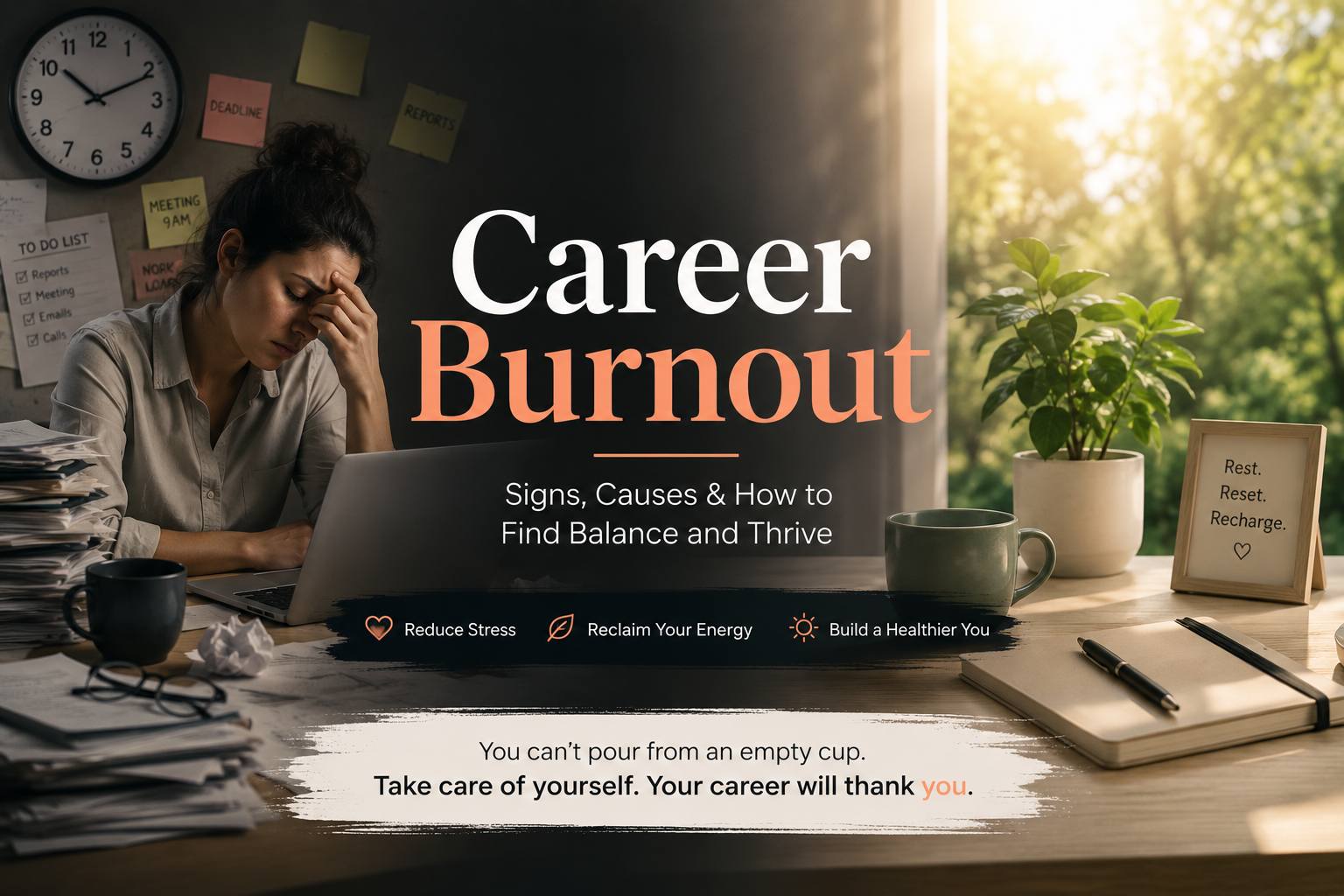
How to Recognize, Recover From, and Prevent Career Burnout: A Complete Guide
We have all been there. You set your alarm for 6:30 AM, but when it goes off, a heavy sense of dread settles in your chest as you realize you are dealing with severe career burnout. The tasks that used to excite you now feel like uphill battles through wet cement. You find yourself staring blankly at a computer screen, wondering where your motivation went and why simple emails suddenly feel completely overwhelming.
If this scenario sounds familiar, you are not lazy, unmotivated, or failing at your job. You are simply experiencing the exhausting reality of chronic workplace strain.
In today’s hyper-connected, always-on work culture, pushing past your absolute limit has somehow been romanticized as high achievement. But living in a constant state of overextension is simply unsustainable. Overcoming this hurdle requires a clear blueprint to recognize, recover from, and ultimately prevent career burnout before it derails your well-being and professional life.
What Is Career Burnout and Why Does It Happen?
Before fixing a problem, you have to understand what it actually is. Career burnout is not just a bad day at the office or a feeling of tiredness after a long week. It is a state of chronic physical, mental, and emotional exhaustion caused by prolonged, unmanaged workplace stress.
The World Health Organization (WHO) officializes burnout as an occupational phenomenon characterized by three primary dimensions:
-
Energy depletion or exhaustion: Feeling completely drained, regardless of how much sleep you get.
-
Increased mental distance or cynicism: Feeling detached, negative, or bitter toward your job, colleagues, or industry.
-
Reduced professional efficacy: Feeling incompetent, unproductive, and unaccomplished.
Root Causes Behind Workplace Stress and Career Burnout
Burnout rarely happens overnight. It creeps up silently through a combination of workplace conditions and personal habits:
-
Unmanageable Workload: Being consistently asked to do the work of two or three people without adequate support.
-
Lack of Control: Feeling like you have zero say over your schedule, tasks, assignment deadlines, or resource allocation.
-
Unclear Role Expectations: Constantly guessing what your supervisor actually expects from you, leading to perpetual anxiety.
-
Dysfunctional Workplace Dynamics: Dealing with toxic colleagues, micromanaging bosses, or office politics.
-
Mismatch in Values: Working for an organization whose core ethics or goals conflict directly with your personal principles.
-
Lack of Social Support: Feeling isolated at work and isolated at home, without an outlet to process daily stressors.
To learn more about chronic fatigue and emotional exhaustion patterns, check out the valuable resources available at https://www.mindtools.com/pages/article/newTCS_08.htm to help assess your current stress levels.
How to Recognize Career Burnout Warning Signs Early

Recognizing the subtle warning signs early is the absolute best way to catch burnout before it completely incapacitates you. The symptoms generally manifest across three main areas: physical, emotional, and behavioral.
       +--------------------------------------------------+
       |             EARLY SIGNS OF BURNOUT               |
       +-------------------------+------------------------+
                                 |
        +------------------------+------------------------+
        |                        |                        |
        v                        v                        v
+---------------+        +---------------+        +---------------+
|   PHYSICAL    |        |   EMOTIONAL   |        |  BEHAVIORAL   |
|  * Insomnia   |        |  * Detachment |        |  * Procrastin |
|  * Headaches  |        |  * Cynicism   |        |  * Isolation  |
|  * Fatigue    |        |  * Anxiety    |        |  * Irritability|
+---------------+        +---------------+        +---------------+
1. Physical Warning Signs
Your body usually registers stress long before your conscious mind acknowledges it.
-
Chronic Fatigue: You feel exhausted in the morning, even after sleeping 8 or 9 hours.
-
Frequent Illness: Prolonged stress weakens your immune system, making you susceptible to constant colds, flu, or digestive issues.
-
Unexplained Aches and Pains: Frequent tension headaches, muscle stiffness, neck pain, or stomach issues.
-
Changes in Sleep Habits: Inability to fall asleep because your mind is racing, or waking up at 3:00 AM worrying about work deliverables.
2. Emotional Warning Signs
Burnout drains your emotional reserves, altering how you view yourself and your career.
-
Cynicism and Detachment: You start thinking, “What’s the point anyway?” and detach emotionally from your team and projects.
-
Sense of Failure and Self-Doubt: Feeling like you aren’t good enough, despite a record of success.
-
Helplessness and Defeat: Feeling trapped in your role with no visible way out.
-
Loss of Motivation: Tasks that used to spark joy or pride now feel like burdensome chores.
3. Behavioral Warning Signs
When your body and mind are overwhelmed, your outward behavior shifts automatically as a defense mechanism.
-
Withdrawal from Responsibilities: Procrastinating on major projects or taking longer to get simple tasks finished.
-
Isolation: Pulling back from social interactions with friends, family, and coworkers.
-
Venting and Irritability: Snapping at colleagues, clients, or loved ones over minor issues.
-
Using Unhealthy Coping Mechanisms: Relying on excess caffeine, alcohol, comfort eating, or endless doom-scrolling to numb your feelings.
Key Takeaway: If several of these symptoms persist for weeks and interfere with your daily life, consider speaking with a qualified healthcare or mental-health professional.
How Stress Differs from Career Burnout
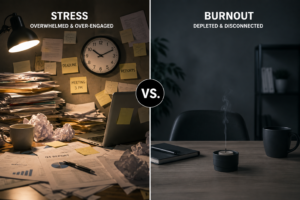
People often confuse high stress with burnout, but they are not the same thing. Stress involves too much: too many pressures, too many demands, too many hours. Burnout, on the other hand, is about not enough: not enough energy, not enough motivation, not enough hope.
| Dimension | Everyday Workplace Stress | True Career Burnout |
| Primary State | Over-engagement and urgency | Disengagement and apathy |
| Emotional Tone | Reactive, anxious, energetic | Numb, hollow, hopeless |
| Physical Impact | Produces hyperactivity/tension | Produces chronic exhaustion/depletion |
| Mindset | “If I can just catch up, I’ll be fine.” | “Nothing matters, things won’t change.” |
| Primary Loss | Depletes physical strength | Depletes emotional and mental drive |
| Long-Term Risk | Premature physical damage | Feeling alienated and deeply detached |
How to Recover From Career Burnout Step-by-Step
Once you realize you are burnt out, trying to simply “push through” will only make matters worse. Recovery requires intentional action, radical honesty, and patience. Here is a step-by-step roadmap to help you recover from career burnout.
  STEP 1: Acknowledge & Pause  --->  STEP 2: Set Strict Boundaries
                                             |
                                             v
  STEP 4: Reclaim Control      <---  STEP 3: Physical Restoration
Step 1: Acknowledge the Reality and Pause

The very first step is to stop denying how you feel. Acknowledge that you have hit a wall.
-
Take Immediate Time Off: If possible, take a chunk of PTO, sick leave, or a short sabbatical. Even a three-day weekend without checking work emails can provide enough breathing space to gain perspective.
-
Disconnect Completely: Turn off work notifications on your personal devices. Inform your team that you are entirely offline.
-
Practice Self-Compassion: Stop beating yourself up for not being a super-performer every single day. Burnout is a biological and psychological response to chronic overload.
Step 2: Establish Firm Work-Life Boundaries
Recovery cannot happen in the same environment that made you sick without changing your rules of engagement.
-
Define End-of-Day Cutoffs: Decide firmly on an end time for your workday (e.g., 5:30 PM). Close your laptop, leave your desk, and transition into your personal evening routine.
-
Say “No” to Extra Commitments: Stop volunteering for extra projects or taking on tasks outside your core job responsibilities while recovering.
-
Establish Communication Boundaries: Inform your team that you do not answer work messages after working hours or on weekends.
Step 3: Prioritize Physical Restoration
You cannot fix mental and emotional depletion while your body is malnourished, sleep-deprived, and stagnant.
-
Fix Your Sleep Hygiene: Aim for 7 to 9 hours of quality sleep nightly. Keep screens out of the bedroom an hour before bed.
-
Nourish Your Body: Focus on real, whole foods that support sustained energy rather than high-sugar snacks that cause energy spikes and crashes.
-
Move Gently Every Day: You do not need intense high-intensity workouts when burnt out. Opt for restorative activities like walking outdoors, gentle yoga, stretching, or light swimming.
Step 4: Reclaim Agency and Seek Support
Burnout often makes you feel powerless. Reclaiming tiny pockets of control helps rebuild your confidence.
-
Delegate and Automate: Audit your daily workload and identify tasks that can be delegated to team members, automated with digital tools, or dropped altogether.
-
Talk to Your Manager: Schedule a professional, solution-oriented meeting with your manager. Outline your current capacity, highlight high-priority projects, and work together to adjust unreasonable deadlines.
-
Seek Professional Counseling: A licensed therapist or career coach can give you tailored coping strategies to address deep-seated work patterns like perfectionism or people-pleasing. You can browse practical mental health guides at https://www.helpguide.org/articles/stress/burnout-prevention-and-recovery.htm for additional professional strategies on emotional healing.
How to Prevent Career Burnout for the Long Haul
Healing from burnout is half the battle; ensuring you do not fall back into the same cycle is the other. Building a resilient lifestyle and sustainable workplace habits is essential to prevent career burnout long-term.
1. Re-Evaluate Your Life Priorities and Career Alignment
Burnout often happens when our daily routine strays far from our underlying core values.
-
Identify Your Core Values: Ask yourself what truly matters to you right now: family time, creative freedom, financial security, health, or autonomy?
-
Audit Your Time Spent: Does your weekly schedule reflect your true values? If health and family are top priorities but you spend 70 hours a week working and zero hours with family, adjustment is necessary.
-
Re-Evaluate Your Current Role: If your company culture demands round-the-clock availability, it may be time to plan an exit strategy toward an organization that respects personal boundaries.
2. Build Up Your Personal Support Network
Isolation fuels burnout. Having strong personal connections acts as a powerful buffer against everyday work stress.
-
Cultivate Non-Work Friendships: Spend quality time with people who care about you for who you are, not what your professional title is.
-
Join Community Groups: Engage in hobby clubs, recreational sports leagues, or volunteer organizations to maintain a rich life outside of your day job.
-
Schedule Unplugged Social Time: Plan dinners, weekend trips, or casual coffee dates where work discussions are explicitly off-limits.
3. Master Sustainable Productivity Habits
Changing how you work day-to-day reduces cognitive strain and keeps stress levels manageable.
-
Practice Time-Blocking: Organize your day into clear, dedicated blocks for focused deep work, administrative tasks, meetings, and breaks.
-
Take Micro-Breaks: Follow techniques like the Pomodoro Method: work for 25 to 50 minutes, then step away from your desk for 5 to 10 minutes to stretch, hydrate, and rest your eyes.
-
Stop Multitasking: Switching rapidly between tasks wastes mental energy and raises anxiety levels. Focus on finishing one task at a time.
4. Address the Mental Traps That Lead to Burnout
Internal thought patterns often push us straight into burnout, even without external pressure.
-
Overcome Perfectionism: Learn to recognize when something is “good enough.” Aiming for absolute perfection in every single task guarantees ultimate exhaustion.
-
Unlearn People-Pleasing: Realize that saying “yes” to every single request from coworkers means saying “no” to your own well-being and priority workload.
-
Separate Self-Worth from Work Output: Your personal worth as a human being is not measured by the length of your to-do list or your job title.
A Daily Routine to Keep Burnout at Bay

Here is a practical framework you can integrate into your workweek to maintain energy, focus, and healthy balance:
-
Morning Routine (6:30 AM – 8:30 AM)
-
Drink a full glass of water upon waking up.
-
Delay looking at work emails or notifications for at least the first 45 minutes of your day.
-
Incorporate light movement, a wholesome breakfast, or 10 minutes of quiet reading.
-
-
Workday Framework (9:00 AM – 5:00 PM)
-
Start with Impact: Spend the first 60–90 minutes on your single most important project while your mental energy is fresh.
-
Schedule REAL Lunch Breaks: Step away from your workspace entirely for lunch. Eat away from screens and get fresh air outside if possible.
-
Batch Communication: Check and reply to emails or team chats at specific, scheduled intervals rather than leaving notifications on constantly.
-
-
Evening Shutdown Routine (5:00 PM – 10:00 PM)
-
Perform a 10-Minute Closeout: Review what you accomplished today, write down your top 3 priorities for tomorrow, and clear your desktop.
-
Visual Disconnect: Close all work browser tabs, shut off your computer, and step away from your home office setup.
-
Engage in Recovery Activities: Dedicate your evenings entirely to hobbies, exercise, family time, and relaxation.
-
Final Thoughts: Taking Back Control of Your Career
Experiencing career burnout is not a sign of weakness or a personal failure. It is simply an alarm system- a signal telling you that your current way of living and working is no longer serving you.
By learning how to recognize career burnout early, taking deliberate, compassionate steps to recover from career burnout, and building resilient habits to prevent career burnout, you can reclaim both your health and your professional fulfillment. You deserve a career that energizes and fulfills you, not one that leaves you drained and exhausted. Take a deep breath, set that firm boundary today, and begin building a healthier, more sustainable career path.