How Job Recruitment Really Works: A Behind-the-Scenes Look at the Hiring Funnel
You hit “submit” on another application. Then… nothing. No confirmation that feels human, no timeline, just silence that stretches from days into weeks. If you’ve ever wondered whether your resume actually reached a person, you’re not imagining things. There’s a very real, structured system swallowing your application the moment you click send. It’s called the hiring funnel.
Most job seekers go through this process half-blind. They know there’s a resume, maybe an interview, then either an offer or silence. What they don’t see is everything happening in between: software quietly filtering their file, a recruiter juggling fourteen open roles at once, and an internal debate over whether to add one more interview round or just make a decision already. Understanding how this system works won’t just satisfy your curiosity. It will change how you apply and where you focus your energy. It also explains why some candidates sail through while others, often more qualified ones, get stuck at the same stage over and over.
So let’s pull back the curtain and walk through exactly what happens between “apply” and “hired.”
What Is a Hiring Funnel, Exactly?
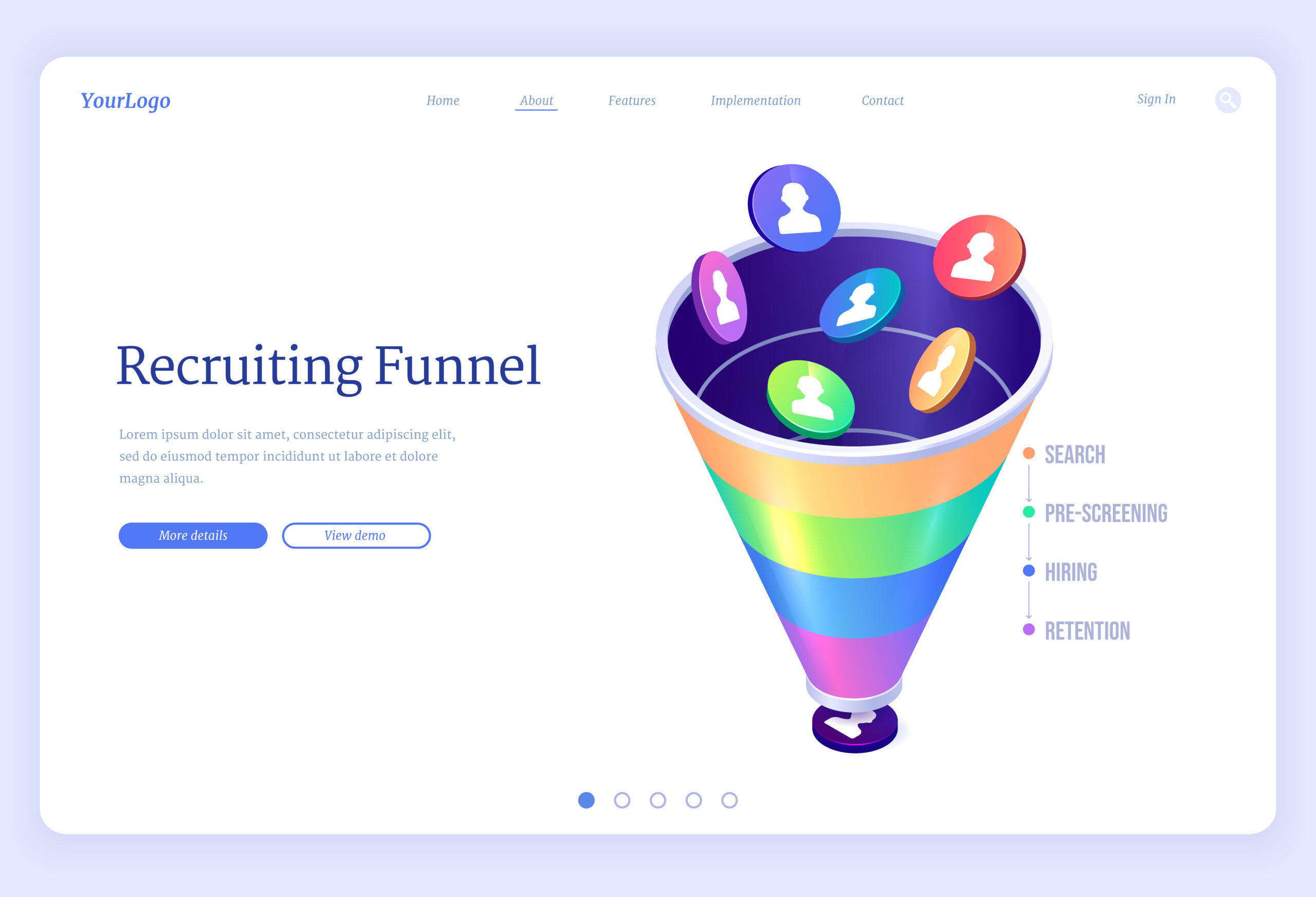
Think of the hiring funnel the same way a marketer thinks about a sales funnel. At the top, you’ve got a huge, loosely qualified crowd. At the bottom, you’ve got one person signing an offer letter. Everything in between is a filtering process. It narrows that crowd down, stage by stage, until only the “best fit” remains.
Recruiters use the term because it’s visually accurate. It’s wide at the top and narrow at the bottom. Screening criteria pull most people out along the way. According to recruitment data compiled from Glassdoor, LinkedIn’s Economic Graph, SHRM, and Indeed hiring research, the average job posting now attracts around 250 applications. Only one to four of those end in an actual offer. That’s a conversion rate hovering between 0.5% and 1.5% from first click to final handshake.
That number alone explains a lot of the frustration job seekers feel. It’s not that your resume is bad. It’s that the funnel was built to eliminate almost everyone, by design, not by accident.
Why Companies Even Need a Funnel in the First Place
It’s worth pausing here because the funnel can feel needlessly cruel to candidates. From the employer side, it’s a survival mechanism. A single job posting on a popular board can pull in hundreds of applications within 48 hours. A recruiter often juggles 10 or more open roles at once. They simply cannot read every resume in full or schedule a call with every applicant.
The funnel exists to make an unmanageable volume of candidates manageable. Every stage is a checkpoint. Each one answers the same question: Is it worth spending more time and attention on this person? That’s not a personal judgment. It’s triage. Once you see it that way, the silence and the delays start to make more sense, even if they still sting.
How the Job Recruitment Process Actually Works, Stage by Stage
Most people assume recruitment is: apply, interview, get hired. In reality, the job recruitment process typically runs through six to eight distinct stages. Each one has its own gatekeepers and its own drop-off rate. Here’s the honest breakdown of what’s happening at each one.
Stages 1–4: Getting Your Application Seen
- Workforce planning. Before a job is ever posted, someone internally has to justify the hire and define the budget. They also need sign-off from finance and leadership. This invisible stage is why “urgent” openings can sit unposted for weeks. It’s also why a role you’re excited about might quietly disappear before you ever apply.
- Sourcing and job posting. The role goes live on job boards, the company’s careers page, LinkedIn, or a recruiter’s own network. This is the top of the funnel, where volume is highest and standards are loosest. Some candidates are also sourced proactively here. That means a recruiter reaches out directly rather than waiting for an application.
- Application screening (ATS filtering). Every resume typically passes through an Applicant Tracking System (ATS) first. This software scans for keywords, formatting, job titles, and basic qualifications before a human ever sees it. A huge share of otherwise qualified candidates get quietly filtered out here, often over formatting choices that have nothing to do with actual skill.
- Recruiter screen. A recruiter, not the hiring manager, does a first-pass review or a short 15-to-20-minute phone call. They’re confirming salary expectations, availability, and basic fit. This stage is deceptively important. It’s often where a resume finally becomes a real person in someone’s mind.
Stages 5–8: From Interview to Onboarding
- Hiring manager interview(s). This is where technical or role-specific evaluation happens, often across multiple rounds. The hiring manager is assessing whether you can actually do the job, not just whether you sound good on paper.
- Panel or team interviews. Larger companies loop in future teammates or cross-functional stakeholders here. They weigh in on culture fit and collaboration style. This is also where “interview inflation” tends to happen, as more voices get added to reduce the risk of a bad hire.
- Offer stage. References get checked, and compensation gets finalized internally. Then an offer is extended, or, sometimes, the process just quietly stalls and candidates get ghosted instead of formally rejected.
- Onboarding. The stage nobody talks about, but arguably the one that matters most. It determines whether the hire actually sticks around past the first few months.
Each stage feeds the next, and weakness at one level compounds everything downstream. Skip proper workforce planning, and you get a vague job description. A vague job description attracts the wrong applicants. Wrong applicants mean screening takes three times longer than it should. It’s a domino effect. That’s a big part of why the recruitment process feels so unpredictable from the outside.
The Numbers Behind the Hiring Funnel: A Reality Check
Data makes this a lot less abstract. Here’s how a typical hiring funnel breaks down by stage, based on aggregated 2025–2026 recruiting benchmarks:
| Stage | Approx. % of Applicants Remaining | What’s Happening |
|---|---|---|
| Applications submitted | 100% | Job posted, resumes flood in |
| Passed ATS/resume screen | ~20–30% | Keyword and qualification filtering |
| Reached recruiter screen | ~10–15% | Human eyes finally review the file |
| Reached the interview stage | ~3–5% | Direct conversation with the hiring team |
| Received an offer | ~1% | Final candidate(s) selected |
| Accepted the offer | <1% | Deal closed |
Why Hiring Has Gotten Slower and Costlier
Time matters just as much as volume. The typical U.S. hire now takes around 44 days from posting to accepted offer, up from roughly 33 days just a few years ago. Cost has climbed too. The average cost-per-hire now sits near $4,700 for non-executive roles, once you factor in job ads, recruiter time, and lost productivity from an empty seat. Executive-level hires cost dramatically more, often tens of thousands of dollars once search fees and lengthy vetting are included.
A few structural shifts are driving the slowdown:
- Application volume has nearly doubled since 2021, as remote work and one-click “easy apply” buttons made it effortless to apply to dozens of roles in an afternoon.
- Interview rounds have multiplied. Companies now average significantly more interviews per hire than they did five years ago. Part of the reason is reducing the risk of a costly mis-hire.
- Scheduling friction is real. A meaningful share of candidates abandon a process simply because interviews take too long to book.
- AI-generated applications are flooding the top of the funnel. This makes it harder for recruiters to separate genuinely qualified candidates from mass-produced resumes.
- Budget approval delays push out the start of hiring in the first place, especially at larger organizations with layered sign-off requirements.
How the Funnel Differs by Industry and Role
Not every hiring funnel behaves the same way, and this is a detail most general advice ignores. The shape of the funnel shifts significantly depending on the field:
| Industry | Typical Applicants per Hire | Relative Speed | Why |
|---|---|---|---|
| Healthcare | ~47 | Fastest | Persistent staffing shortages mean less selectivity |
| Retail / hospitality | Moderate | Fast | High turnover, urgent staffing needs |
| Tech/software engineering | ~191 | Slow | High competition, multiple technical rounds |
| Finance | High | Slowest | Highly selective, longer vetting, and compliance checks |
If you’re job hunting in a slower-moving field like finance or specialized tech, patience isn’t optional. It’s baked into the system. If you’re in healthcare or another high-demand field, a fast-moving process is normal. A stalled one is more likely a red flag about the company itself.
How AI Is Reshaping the Hiring Funnel
It would be incomplete to talk about how recruitment works today without addressing artificial intelligence. It’s changed both ends of the funnel at once. On the candidate side, AI tools make it trivially easy to generate a tailored resume for every posting. That’s part of why application volume has exploded. On the recruiter side, AI-powered screening and sourcing tools are increasingly used to sort, rank, and even proactively reach out to candidates before they’ve applied at all.
This cuts both ways for job seekers. Your resume is more likely than ever to be evaluated, at least in part, by software before a human sees it. That makes clear formatting and honest keyword alignment more important, not less. It also means recruiters are increasingly reaching out directly to candidates who match a role’s criteria, even if that person never formally applied. Keeping an accurate, current LinkedIn profile has become almost as important as the resume itself for exactly this reason.
Why the Hiring Funnel Feels So Slow (And So Unfair)
Here’s the part most career advice skips: the funnel isn’t broken because you’re doing something wrong. It’s genuinely built to filter out the majority of people, on purpose, at every single stage.
That reframe matters. If you’re sending out 80 applications and getting zero responses, the problem usually lives at the ATS or recruiter-screen stage. It’s not because you’re unqualified. It’s more likely formatting, keyword mismatch, or just being one of hundreds of applicants for the same slot. If you’re landing interviews but no offers, the issue has shifted downstream, to how you’re presenting yourself once you’re in the room.
A few uncomfortable truths worth knowing:
- Referrals convert dramatically better than cold applications. An internal referral often skips the noisiest early stages entirely because a recruiter flags the file the moment someone vouches for the candidate.
- Not all industries filter the same way. Healthcare tends to move candidates through faster because of persistent staffing shortages. Finance and highly specialized tech roles are notoriously slower and more selective.
- Silence is standard, not personal. Most companies are simply bad at closing the loop with rejected candidates. Formal rejection emails are often deprioritized in favor of just moving on to the next open req.
- Listing too many “must-have” requirements backfires on employers. Job postings loaded with 15 or more requirements tend to scare off qualified candidates. This especially affects women and candidates from underrepresented groups, who are statistically more likely to only apply when they meet nearly every listed criterion.
How to Beat the Odds: Making the Hiring Funnel Work for You
Once you understand the shape of the funnel, you can stop guessing and start diagnosing. A few practical moves that actually shift your odds:
- Get past the ATS first. Mirror the language used in the job posting itself. Use standard section headers like “Experience” and “Education,” and avoid heavy graphics or tables that scanning software often can’t parse.
- Prioritize referrals over cold applications. Even a loose LinkedIn connection at a target company can be worth more than ten additional blind applications. Don’t be afraid to ask for a short introduction.
- Apply early, not exhaustively. Recruiters often review the first wave of applicants most closely, before volume overwhelms their attention. Applying within the first 48 hours meaningfully improves your odds.
- Treat the recruiter screen as a real interview. This short call is often where the real filtering happens. Come prepared with a clear answer to “tell me about yourself” and a specific salary range in mind.
- Keep your LinkedIn profile as sharp as your resume. More recruiters are sourcing candidates proactively through AI-assisted tools. An outdated profile can quietly cost you opportunities you never even knew existed.
- Track your own funnel. If you’re applying broadly and getting no responses, the leak is at the top. If you’re interviewing but not closing, the leak is at the bottom. Diagnose before you overhaul your entire approach.
Frequently Asked Questions About the Hiring Funnel
How long does the average hiring funnel take from application to offer?
Around 44 days on average in the U.S., though this varies widely by industry, seniority, and how many interview rounds a company requires.
Why do I never hear back after applying?
In most cases, the application either didn’t clear the ATS screen or was deprioritized once a stronger pool of candidates emerged. Most companies simply don’t have a process in place to formally notify every rejected applicant.
Does applying through a job board work as well as networking?
Not typically. Sourced or referred candidates consistently convert to interviews and offers at higher rates than candidates who apply cold. They skip the most competitive early screening stages.
Is it normal for a hiring process to involve multiple interview rounds?
Yes. The average number of interviews per hire has risen substantially over the past several years. Companies are trying to reduce the risk of a bad hire, particularly for senior or technical roles.
Conclusion: Understanding the Hiring Funnel Is Your Advantage
The hiring funnel isn’t designed to make your job search easy, and pretending otherwise won’t help you. But once you see it for what it actually is, a structured, multi-stage filtering system with predictable drop-off points, the process stops feeling like a black box. It starts feeling like something you can actually navigate.
You won’t beat every filter every time. Nobody does. But understanding where recruiters focus their attention, why silence happens, and which stage is quietly working against you gives you something most job seekers never get: a map. And in a job market this crowded, a map is worth more than another rewritten resume.